


[EDITOR’S NOTE: The following is a Letter to the Editor, written and submitted by a verified resident. It represents the opinion of the author, and does not necessarily reflect the views of South King Media or its staff.]
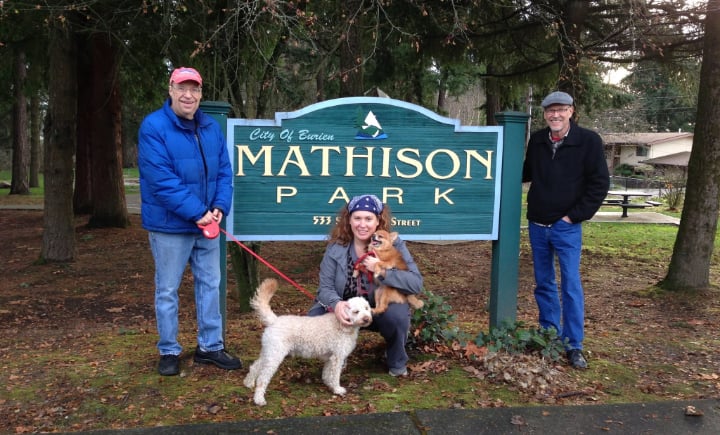
The Port of Seattle has announced its plans for the destruction of several majestic native Douglas Firs at Burien’s Mathison Park.
They plan to destroy the trees between fall and the end of the year. That is a 6-month reprieve from their original plan to cut them last Spring without citizen or city council comment.
This is part of their Flight Corridor Management Program although Mathison Park is not in Sea-Tac’s flight path, at least not yet. Residents along the Sound in Des Moines, Normandy Park and Burien should expect planes to start taking a shortcut over their homes toward the runways as part of the Port’s attempt to serve as many new passengers as if they were building a fourth runway.
The map at Mathison Park and online is pretty hard to follow. I am not sure the trees to be destroyed are the same ones Port staffers pointed out to the Port commissioners and me. They are certainly not the ones painted with numbers after we demanded they identify which trees they were targeting. And they are certainly not the ones closest to the flight path and airport. Absolute power corrupts absolutely.
As expected, the replacement trees are foreign to the Pacific Northwest. But I did not expect that some of the trees would be invasive species and prone to breaking in storms with shallow roots that upend sidewalks.
Let’s take a look at the foreign replacements:
- Hackberry—Best grown in the Mississippi Valley but Southern Living Magazine warns it is “one of 6 trees you should never, ever plant.” Especially in suburban areas like Burien, the brittle wood is prone to breaking in storms and the shallow root systems destroy sidewalks. People debate whether this is a “junk tree.” And what about the aphids?
- Lacebark Elms—Listed as an invasive species in 6 states. Weak wood can break in storms. Seeds spread aggressively. Native to Eastern Asia.
- White Oak— Root systems are highly invasive. A hardwood from eastern and central United States.
- Black Tupelo—Native to Mississippi, eastern North America, central Florida, eastern Texas and Mexico. Nice fall display but messy fruit litter causes slippery sidewalks. If we had to have a Tupelo tree, I would have preferred a white Tupelo where bees use the nectar to make the famous sweet Tupelo Honey. By the way, “Tupelo” in native American language translates as “Swamp Tree.”
- Shore Pine—It is the only native tree selected and it does have a high tolerance for salt spray. But Mathison Park is near the highest spot in Burien, far away from any shore.
My parents moved to this five-acre, hill-top spot in the 1940s because my mother loved trees—magnificent Pacific Northwest Douglas Firs and other native trees. Instead of getting rich by selling off the land, Dad donated it to the city of Burien so the public could have the same wonderful experience my four siblings and I had growing up.
We never thought it would become a junk tree museum.
– Eric Mathison
Do you have an opinion you’d like to share with our highly engaged local Readers? If so, please email your Letter to the Editor to scott@southkingmedia.com and, pending review and verification that you’re a real human being, we may publish it. Letter writers must use their full name, as well as provide an address and phone number (NOT for publication but for verification purposes).


What I find most striking about this story is that, at Forest Ledge adjacent to Eagle Landing Park, I’ve spent more than a decade restoring a struggling forest. I invested over $25,000 in a professional forest management plan and have dedicated countless hours to removing invasive plants and non-native trees to help restore the natural ecosystem.
Given that experience, I find it difficult to imagine that the Port of Seattle would intentionally plant non-native trees. I commend the citizen who took the time to research the issue and bring it to light. If the claims are accurate, I find the situation deeply concerning.
Hi John, thanks for your urban forestry efforts. I would like to volunteer to help you with your work if you could use it. Perhaps the folks who run this site can forward you my email if you are interested.
This is another example of the Port of Seattle’s approach to the communities surrounding the airport: laser focus on their needs, with near total disregard for negative impacts on those communities.
I remember reading about these trees earlier in the year and am dismayed that the Port still wants to go ahead with their removal. Firstly, they should not be removed unless there is a legitimate reason that the Port can clearly and credibly document. Second, if the trees must be removed, the replacements should be native species. There should be plenty of options that won’t grow too tall.
Finally, since this is a City of Burien park, the Port should not be able to cut trees there without a permit from the city. I think any approval from the city should undergo careful review to ensure that Burien tree codes are followed, and replacements (again, if necessary) are appropriate.