
New Garden Companions for 2026
Spring is here! This year, the season began on Friday, Mar. 20, with the arrival of the Spring Equinox, an astronomical point on our calendars which marks the Northern Hemisphere transitioning more directly in line with the sun and its warmth. (The Autumnal Equinox begins on September 22 and heralds the Northern Hemisphere’s move away from summer and toward winter yet again.) Yet, it is in this late part of winter we begin to start thinking more about springtime as the seed and plant catalogs have arrived in your mailboxes, seed packet displays are in most stores and the Northwest Flower and Garden Festival has concluded for another year.
As a home gardener, one of the satisfying rituals of spring is finding new garden treasures; those plants that are making their debut in the retail marketplaces. They are generally sports or hybrids of plants that have been on the market for years, with the new ones having a different sense of style, color or size to them. Or, they can be new hybrids. Whether larger or smaller in size; darker, lighter or variegated leaves or larger flowers; etc., all have the ability to add something ‘extra’ to the humble part of your landscape that cries out to be noticed. A little dramatic? Perhaps. But, you get the gist of what I’m saying. No part of a landscape needs to be boring. It is worth too much in the way of underutilized garden space, monetary value and in satisfying your aesthetic senses to be just ‘Okay.’ A new vignette may be just the thing to enliven the space and create a smile on your face on your face when gazing at the site.
Having served as a judge of new heat-tolerant plants and talked to many wholesale growers and nurseries, it appears there are many new plants which will be coming to retail local garden centers. When I review an assortment of new plants in the marketplace, my prime considerations include drought and heat tolerance (after root systems are established – think three years), low maintenance and, of course, presence in the garden. This is a good year for new introductions as there are MANY to new plants from which to choose. My candidates for your horticultural consideration include grasses, perennials, shrubs and trees (sorry folks, I have no interest in annuals). Seek them out. If not available, ask for them. That’s when garden centers know there is a potential market for a new plant. Definitely, do your own research and evaluate their worthiness for that needy spot in your own yard or container. While I do dislike writing a column which is more list than anything else, this is my very subjective list of 2026 new plant winners and runners-up (and, I am quite sure that, if you talked to ten other gardeners, would have ten different lists).
BTW, an ‘x’ in the botanical name indicates it is a hybrid; a Nativar is a cultivated version of a native plant and not a hybrid.
GRASSES
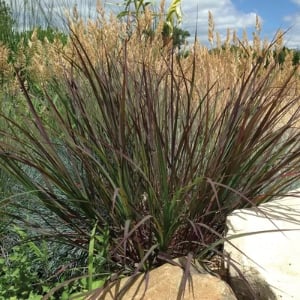
‘Black Hawks’ Big Bluestem (Andropogon gerardii) 5’ x 2’, Sun, Nativar, Heat/Drought tolerant, Deer-resistant
Features green foliage which turns plum-black, excellent drought and heat tolerance (after the first three years) and a strong vertical look, Its near-black autumn color and strong, upright growth habit create a dramatic presence in fall gardens For a classic autumn display, consider pairing Blackhawks with companion plants like black-eyed Susans (Rudbeckia spp.), tall stonecrops (Hylotelephium spp.)and asters (Symphyotrichum spp.). Their contrasting colors, textures and movements will complement the Blackhaws and provide a late-season WOW vignette in the landscape.
Runners-Up
- ‘Golden Needles’ Prairie Drop Seed (Sporobolus heterolepsis), 2’ x 2’, Sun, Native
- ‘October Sky’ Switchgrass (Panicum virgatum), 5’ x 2’, Sun, Native, Deer-Resistant
- ‘Prairie Munchkin’Little Bluestem (Schizachyrium scoparium) 2’ x 2’, Sun, Native, Drought-tolerant
PERENNIALS
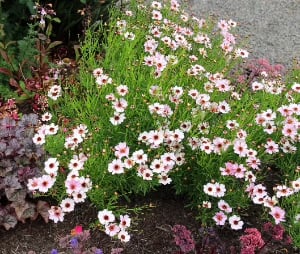
‘Nova Opal’ Thread Leaf Tickseed (Coreopsis verticulata) , 12” x 18”, Nativar, Sun, Pollinator, Drought-Tolerant, Deer-resistant
Originating in the Central Plains the Southeast U.S., Opal is not the typical yellow tickseed. This one has shades of light pink. Gotta love a low and tight plant that flowers all summer and autumn (without deadheading). An excellent , low-maintenance, plant for mixed beds, borders, mass plantings and even containers. Can you imagine how they looked scattered throughout the prairies of earlier times in history?
Runners-Up
- ‘Sundial’ False Sunflower (Heliopsis helianthoides), 4’ x 3’, Nativar, Part/Full Sun, Pollinator
- ‘Prairie Princess’ Ironweed (Veronia x), 2.5’ x 2.5, Nativar, Sun, Autumn bloomer, Rosey Pink flowers
- ‘Lemon Perfection’ Catmint (Napeta x), 12’ x 18” Sun, Native, Heat/Drought tolerant, Golden Foliage, Pollinator
- ‘Treasurer Trove’ Black Eyed Susan (Rudbeckia x), 3’ x 3’, Native, Part/Sun, Pollinator,
- Iron Butterfly’ Iron Weed (Vernonia lettermannii), 3’ x 2’, Part/Full Sun, Native, Abundant purple flowers, Nativar, Pollinator, Deer Resistant
- ‘Granita’ Pussytoes (Antennaria dimorpha) 2” x 15”, Sun, Native, Silver-Green groundcover foliage
- ‘Ultra Violet’ Salvia (Salvia greggii), 3’ x 3’, Sun, Pollinator, Cold-hardy, Deer/Rabbit resistant
Shrubs
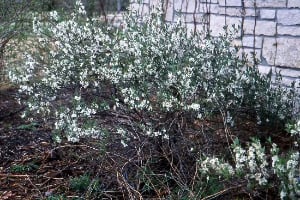
‘Boulder Weeping’ Sand Cherry (Prunus pumila Besseyi), 4- x 6’, Sun, Native, Dwarf, Pollinator, Water-wise.
This drought and heat-tolerant sub-shrub is a ground-hugging native plant which can reach a mature spread of 6’ – 8’. Its low height, glossy green leaves, brilliant red autumn colors and low-water needs make it an excellent groundcover. Pollinators are drawn to the white spring flowers and the summer fruit will draw in the birds (and, yes, the fruit are fit for human consumption but better when cooked for jams, etc. Tolerates cold, heat, wind and drought.
Runners-Up
- ‘Silver Fountain” Butterfly Bush (Buddleia alternifolia), 10’ x 8’, Sun, Pollinator, fragrant flowers
- ‘Centennial Ruby’ Hydrangea (Hydrangea macrophila), 3’ x 3’, Part/Sun, Pollinator, Ruby-Red Blooms
- ‘Fairy Tale Cascade Hydrangea (Hydrangea x), 4’ xc 4’, Part Shade, Pollinator, Horizontal-Trailing habit, White, Different look from typical hydrangeas
- ‘Let’s Dance Sky View Hydrangea (Hydrangea macrophylla ×serrata), 3’ x4’, Part/Sun, Pollinator, Pink-Blue-Purple depending on pH, Repeat Bloomer
- ‘Kodiack Jet Black’ Diervilla (Diervilla rivularis), 3’ x 4’, Part/Shade, Native, Drought tolerant, Pollinator, Deer resistant, Black-Purple Foliage, Repeat Bloomer
TREES
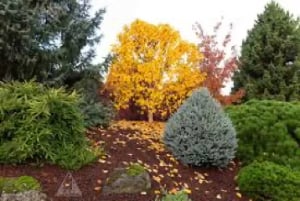
‘Cinnamon Curls’ Dwarf Korean Birch Tree (Betula constata) 9’ x 9’, Sun, Dwarf, Cold-tolerant
This tree is compact and single stemmed. It has bright green foliage which transitions to a bright golden-yellow. Its exfoliating exterior has cinnamon-colored undersides of thin strips curling bark which is a focal point in the winter landscape. A main selling attribute (at least to me) of this tree is that it has not been bothered by the tree-killing Bronze Birch Borer during its trials. Cinnamon Curls is excellent in limited spaces and even large containers. Cinnamon Curls is adapted to conditions of greater cold and higher pH soils where other Betula nigra cultivars do not perform well making it an all-round great choice for a smaller yack yard or patio area.
Runners-Up
- ‘Wincraft Black Smoke Bush (Cotinus coggygria) 10’ x 8’, Sun, Dark Foliage, Deer, rabbit resistant
- ‘Easy As Pie’ Dwarf Bush Cherry (Prunus x) 5’ x5’, Sun, Dwarf, Self-fertile
- ‘Hot Wings’ Tartarian Maple (Acer tattaricum), 18’ x 15”, Sun, Excellent summer display of bright red helicopter-type seeds that look like flaming wings.
- ‘Silver Totem’ Buffaloberry (Shephersia argentea), 10’ x 3’, Sun, Native, Narrow, silvery green leaves.
Readers should remember this list is totally subjective. The best plants are totally my opinion. It is based upon the many plants I have seen in the past few months and like because of their individual virtues, like hardiness, versatility and “WOW” factor that the neighbors will envy. Use my list to kick-off your own horticultural sleuthing for the new additions to the gardening world. The downside to this horticultural treasure hunt is remembering the virtues of patience and perseverance. As new plants, to the market, these little gems may not appear in your favorite garden center for up to a year. Do ask the garden center staff if the plants in question can be special ordered or add your name to a Waitlist. Over the past thirty years, those tactics have worked many times for me. Best of luck with this annual rite of Springtime and the newfound joy in your little patch of heaven. Happy gardening all!

Contributing garden columnist, Bruce Bennett, is a WSU Certified Master Gardener, Certified Professional Horticulturalist garden and lecturer. If you have questions concerning this article, have a gardening question or two to ask concerning your own landscape or want to suggest a topic for a future column, contact him at gardenguy4u@gmail.com.