

EDITOR’S NOTE: South King Media Founder/Publisher Scott Schaefer serves on the Board of Directors for the Seattle Southside Chamber of Commerce.
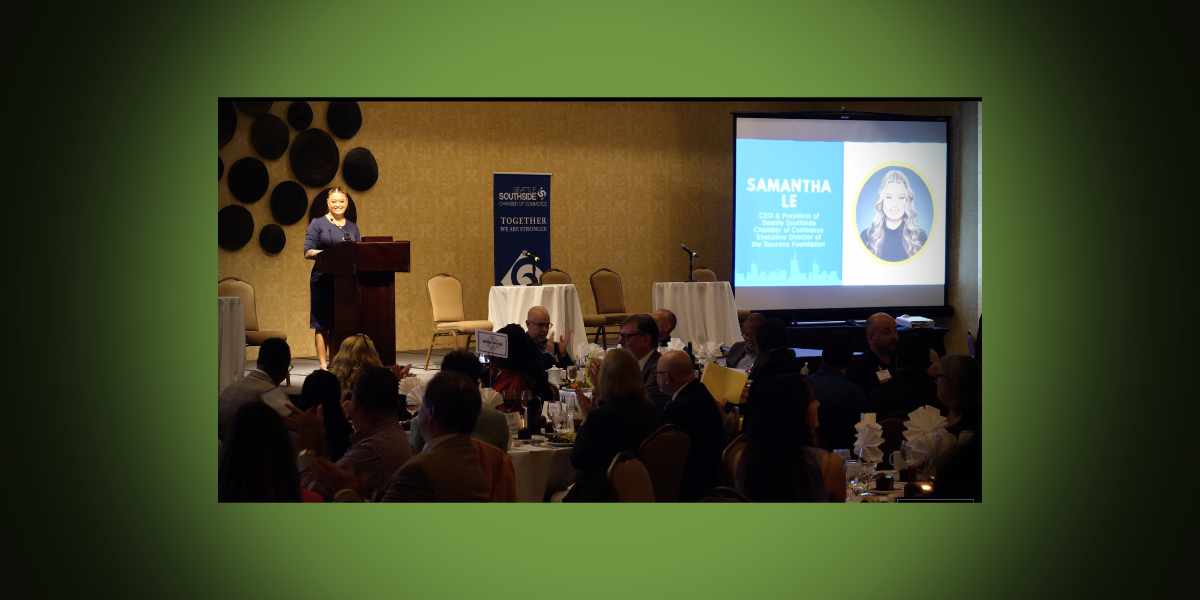
South King County leaders outlined plans for new housing, transportation improvements and workforce training while warning that tight budgets and rising costs could limit progress at the Seattle Southside Chamber of Commerce’s 2026 “State of the Region” event held on Thursday, Oct. 1.
The chamber’s 38th annual gathering at the DoubleTree Seattle Airport brought together city leaders, educators, state lawmakers and representatives from King County, the Port of Seattle and major employers. Their updates repeatedly linked the region’s economic future to whether residents can afford housing, attain jobs and gain the skills employers need.
“Because the future of South King County will not be shaped by one city, one elected official, one institution, or one business,” said Samantha Le, the chamber’s president and CEO. “It will be shaped by how well we work together.”
Burien
Burien Mayor Sarah Moore emphasized child care, neighborhood support and safer transportation connections. The city was aiming to open nine home-based child care centers before year’s end, she said.
Moore also reported that Burien and the Trust for Public Land secured $300,000 to make Salmon Creek Ravine safer and more accessible. She highlighted utility tax relief for residents with low incomes and federal funding for pedestrian and bicycle improvements along Southwest 152nd Street and First Avenue South.
Burien is working with neighboring cities to address potential impacts from proposed airport projects, Moore said, balancing the airport’s economic importance with residents’ health and well-being.
Normandy Park
Normandy Park Deputy Mayor Sue-Ann Hohimer emphasized the value of regional partnerships for a largely residential city with limited commercial property. Rather than trying to provide every service and amenity within its boundaries, she said, Normandy Park can build on its residential character, parks and open space while supporting businesses in neighboring communities. Oh, and she loves the wildlife in the city, including coyotes.
Highline College/Des Moines
Highline College Vice President for Institutional Advancement Josh Gerstman said more than 9,000 students began classes during the college’s fall opening week. He highlighted a pilot program providing free ORCA cards to community and technical college students and invited elected officials to hear directly from students at the college’s Nov. 17 legislative breakfast.
Speaking on behalf the City of Des Moines, Gerstman described efforts to revitalize downtown, update development regulations and improve service for commercial permit applicants. He said the Marina Steps were under construction and expected to open by the end of the year.
SeaTac
SeaTac Mayor Mohamed Egal described plans for a new civic center and community campus in the Angle Lake area, along with investment in human services, child care and street safety. He also highlighted the city’s Global Dining District initiative along International Boulevard as a way to support local restaurants and connect visitors with the community.
Tukwila
Tukwila Mayor Thomas McLeod highlighted potential housing developments near Southcenter and along Tukwila International Boulevard. One proposal near the light rail station could include 1,000 to 4,000 housing units and a pedestrian bridge connecting residents to transit, he said.
McLeod also described the Tukwila Promise, which he said allows Foster High School graduates to attend Highline College for free. Participation grew from 16 students in 2024 to 55 in 2025, he said.
The combination of tuition support, light rail access and free transit passes can remove barriers for students who do not own cars, McLeod said.
Port of Seattle
Airport growth offered another example of the region’s shared opportunities and challenges.
Port of Seattle Commission President Ryan Calkins described an approximately $2.5 billion renovation of the airport’s S Concourse, planned as an eight-year project in four phases. He said the work would create opportunities for contractors, subcontractors and workers while keeping as many international gates operating as possible.
Calkins also highlighted the Port’s community investment and workforce programs, including an aviation security course taught through Highline College.
Highline Public Schools
Highline Public Schools Superintendent Dr. Ivan Duran urged employers to take a more active role in preparing students for careers through internships, job shadowing and partnerships.
Duran paired examples of career training and bilingual learning with an acknowledgment of academic challenges. He reported that 32.9% of students met grade-level standards in English language arts and 22.8% did so in math.
“These results are not good enough and we own the responsibility for improving them,” Duran said.
The district serves approximately 17,500 students across 34 schools in Burien, Des Moines, Normandy Park, SeaTac and White Center, he said. Duran pointed to health care training and other career programs as opportunities to connect classroom learning with regional employers.
South King County
Among the specific investments discussed, King County Councilmember Steffanie Fain said a city transportation improvement program she created would direct about $2 million annually to cities in her district beginning in January for sidewalks, crossings, transit infrastructure and roads.
South King County has gained light rail stations and restructured bus service, Fain said, but those investments must be accessible to the people who need them. Traveling east to west across the Kent Valley remains more difficult than traveling north to south, she said.
Fain also warned that King County faces a projected $120 million general fund shortfall in 2028 and 2029, putting pressure on services including public safety, courts, public health and elections.
“Government sees separate jurisdictions and agencies, but that family just needs everything to work,” she said.
Housing was another recurring concern, with speakers describing both development opportunities and the need to ensure workers can afford to remain in the region.
Message from Gov. Bob Ferguson
In a recorded message, Gov. Bob Ferguson expressed his admiration for South King County, and highlighted state investments in housing, road and bridge preservation, and law enforcement recruitment and retention. He also described an economic development council tasked with recommending practical steps to strengthen Washington’s competitiveness and expand jobs that pay family-supporting wages.
11th Legislative District
State Rep. David Hackney, of the 11th Legislative District, focused on public safety, calling for police agencies to have the staffing, training and equipment needed to address violent crime and organized crime.
33rd Legislative District
Rep. Mia Gregerson, representing the 33rd Legislative District, warned that rising costs for housing, food, health care, transportation and child care are making it harder for residents to pursue education and stay in the workforce. She said lawmakers would face difficult budget choices while trying to preserve support for people with the greatest needs.
Panel Discussion
The evening concluded with a panel moderated by Kevin Dunn, chair of the chamber’s Government Affairs Committee. Audience questions addressed arts and culture, community engagement and how cities could sustain support for small businesses after summer World Cup activities.
Video
Below is an edited video of this event, as filmed/edited by Scott Schaefer (running time 2-hours, 14-minutes):